Managing a dental practice today means balancing clinical excellence with the increasing demands of documentation, patient expectations, and operational complexity.
For many teams, the challenge isn’t the care itself—it’s everything that surrounds it.
This is where a new category of technology is emerging: ambient AI in dentistry.
Unlike traditional tools that require constant input, ambient AI works quietly in the background—capturing information, supporting clinical decisions, and helping teams stay focused on the patient rather than the screen.
What Is Ambient AI in Dentistry?
Ambient AI refers to technology that listens, observes, and documents clinical interactions in real time—without interrupting the natural flow of care.
In a dental setting, this can include:
-
Capturing clinical notes during patient conversations
-
Recording periodontal measurements through voice
-
Structuring documentation automatically for compliance and billing
Instead of writing notes after the appointment, the work happens as the visit unfolds.
Why Ambient AI Matters for Dental Teams
Documentation has long been one of the most time-consuming parts of dentistry.
It often:
Ambient AI changes that dynamic.
When documentation is captured in real time:
-
Providers stay focused on the patient
-
Notes are more accurate and complete
-
Teams reduce end-of-day backlog
The result is not just efficiency—it’s a more human-centered clinical experience.
What It Looks Like in a Real Appointment
Imagine a routine hygiene visit.
Instead of pausing to enter data or relying on a second team member to chart, the clinician speaks naturally while examining the patient. Measurements are recorded instantly. Spoken clinical observations are captured as they happen.
Later, there’s no need to reconstruct the visit from memory.
This shift may seem small—but over the course of a day, it changes how the entire team works.
From Documentation to Better Conversations
Ambient AI doesn’t replace clinical judgment—it supports it.
With less attention on screens and keyboards, providers can:
Patients notice this difference.
Instead of feeling rushed or disconnected, they feel:
How Ambient AI Supports Clinical Insight
In some workflows, ambient AI works alongside diagnostic tools that provide additional clinical perspective.
For example, imaging analysis tools like Pearl's Second Opinion can highlight areas of concern on radiographs, giving providers another layer of information to evaluate.
When these insights are presented chairside, they help patients better understand what’s being seen—and why treatment may be recommended.
At the same time, ambient documentation tools capture the conversation as it happens—recording how findings are explained, how patients respond, and what decisions are made in the moment.
This creates a more complete clinical record—one that reflects not just what was diagnosed, but how it was communicated.
Why This Shift Is Gaining Momentum
Several trends are driving interest in ambient AI:
-
Increasing documentation requirements
-
Ongoing staffing challenges
-
Higher patient expectations for communication and transparency
-
The need for more efficient, consistent workflows
Ambient AI addresses all of these—not by adding more steps, but by reducing the need for them.
The Bigger Picture
Ambient AI is not just about faster documentation.
It represents a broader shift toward:
-
Real-time workflows
-
Integrated clinical experiences
-
Technology that supports, rather than interrupts, care
As dentistry continues to evolve, the ability to capture and act on information in the moment will become increasingly important.
This shift is already being reflected at an industry level. The HealthStream Ventures 2026 Dental Technology Landscape Report highlights how cloud-based, unified practice management systems are becoming the foundation for AI-driven workflows—enabling real-time data access, integrated clinical tools, and more consistent operational performance.
As more practices begin exploring ambient AI, the question becomes less about the technology itself—and more about whether their current systems can support it.
What does AI actually require to work effectively?
If you’re looking to better understand how AI works in a unified environment, it can be helpful to see how unified platforms enable real-time workflows.
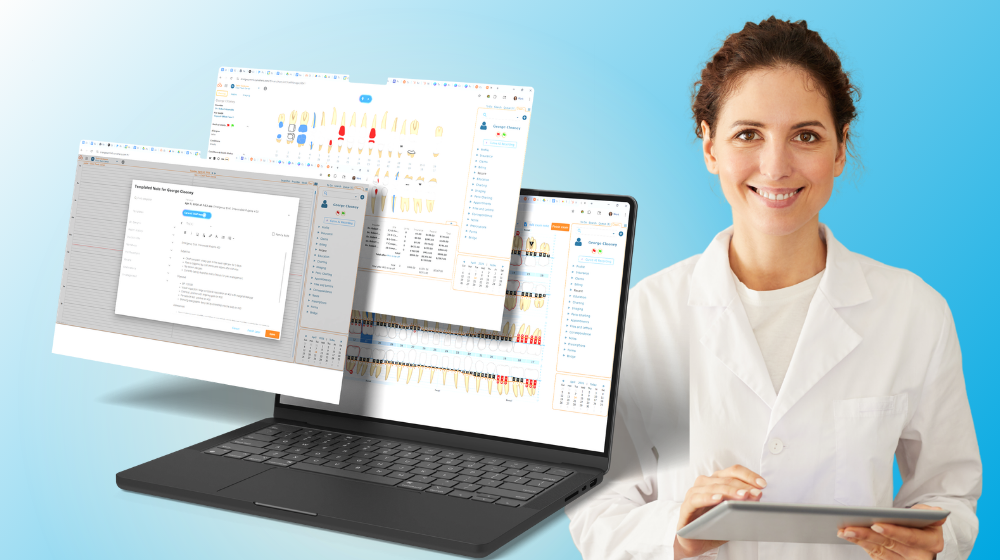
For example, in Curve, native ambient AI updates the patient’s record as the visit unfolds—capturing perio charts, structured SOAP notes, and clinical observations in real time.
Many practices find value in evaluating their current systems alongside a live demonstration to see what’s possible.