

Digital dental payment processing used to be simple: a credit-card machine at the front desk handled transactions, and staff manually entered payments into the system. However, today's payment environment has become much more complex, reflecting the many changes and advancements in how we handle payments.
The Three Payment Processing Models Dental Practices Use Today
When dental practices consider different payment solutions, they usually come across three main approaches. Understanding these approaches can help practice owners and office managers see how payment processes fit into their overall financial system.
Third-Party Payment Processors

The most traditional approach is to use a standalone merchant processor that works independently from the practice management system. In this setup, the payment machine or portal handles transactions on its own, and staff then manually record payments in the patient ledger, making the process straightforward but requiring some extra steps.
Typical characteristics include:
- Separate payment machines or portals
- Manual payment posting into the patient ledger
- Financial reports stored outside the clinical system
- Additional reconciliation steps for front-office teams
While this approach remains common, it often introduces administrative burden during checkout and end-of-day balancing.
Integrated Payment Platforms
Integrated payment systems smoothly link a third-party processor with the practice management system through an external connection. In these setups, transaction information moves effortlessly between the systems, making manual entry unnecessary and saving time.
Common capabilities include:
- Automatic posting of payments to patient accounts
- Online payment portals and payment links
- Card-on-file availability
- Improved reconciliation compared with standalone payment machines
While connected systems make some tasks easier, they often rely on several vendors and system dependencies. This can sometimes make things a bit more complicated when issues pop up.
Embedded Payment Processing
The latest advancement in modern dental software is embedded payment processing, which lets payment features connect seamlessly into the practice management system. Instead of needing an external processor, the payment system works as a built-in part of the software, making transactions smoother and more convenient.
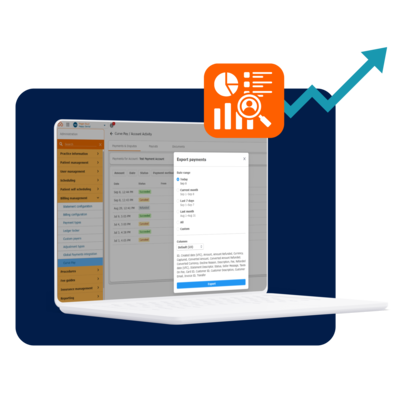
Typical capabilities include:
- Payments processed directly within the patient chart
- Automatic posting to the patient ledger
- Unified financial reporting inside the PMS
- Text-to-pay and online payment options
- Simplified reconciliation tasks
Payment-related tasks become significantly easier when transactions automatically post to the patient ledger and financial reporting updates in real time.
Connected financial reporting helps practice leadership track collections performance, monitor outstanding balances, and simplify reconciliation processes.
Cloud-native systems such as Curve Dental, through Curve Pay, embed payment processing directly into the practice management system. This setup allows dental teams to manage scheduling, clinical records, insurance tasks, and patient payments within a single operating system.
What Dental Practices Should Know Before Choosing a Payment Processing Approach
Each of these three approaches processes payments differently within the practice’s financial system, which can affect how easily transactions are reconciled, how transparent the reports are, and the front office workload. Choosing the right approach can make a meaningful difference in the efficiency and clarity of your practice’s financial operations.
For many practices, the focus has shifted from simply asking “Which processor has the lowest transaction fee?” to considering “Which payment setup simplifies our entire revenue cycle?”
The Hidden Cost of Third-Party Payment Systems
Transaction fees often dominate conversations about payment processing. However, the largest costs associated with disconnected payment systems are usually operational rather than transactional.
These costs can include:
- Additional staff hours spent managing reconciliation
- Slower financial reporting for practice leadership
- Increased pressure on front-office staff
- Reduced visibility into real-time collections performance
- Inconsistent patient payment experiences
As a result, many practices evaluating new payment solutions now consider task integration and operational efficiency alongside pricing.
The Challenges of Disconnected Payment Systems
In many modern dental offices, payment processing is only one part of a broader financial technology setup.
A typical setup might include:
- Practice management software
- A third-party payment processor
- An online payment portal
- Patient financing software
- A separate reporting dashboard
When each system works independently, coordination across the revenue cycle becomes more challenging. Systems that require duplicate data entry increase the risk of reconciliation errors and administrative workload.
Common practice challenges include:
- Payments that do not immediately appear in the patient ledger
- Reconciliation mismatch between systems
- Delayed financial reporting
- Additional administrative time spent troubleshooting financial data
When financial data is distributed across multiple platforms, reporting accuracy and visibility often decline. Over time, these inefficiencies contribute to what many practices describe as revenue leakage because financial tasks become slower and more difficult to manage.
Patient Payment Experience

Patient expectations around healthcare payments continue to change. Many patients now expect convenient digital payment options, including:
- Text-to-pay links
- Secure online payment portals
- Card-on-file payments
- Contactless checkout options
Enhancing your payment process creates a more seamless experience for patients. Convenience often improves payment completion rates and reduces outstanding balances.
Why Dental Practices Are Rapidly Switching to Embedded Payment Systems
As dental practices switch to cloud-based systems and digital communication tools, financial tasks are also becoming more connected. Embedded payment systems organize payment processing directly with the practice's operational setup.
This connected setup can help practices:
- Simplify collections workflows
- Reduce administrative coordination between systems
- Improve real-time financial visibility
- Create a more consistent patient payment experience
As more practices adopt embedded payments, they enjoy smoother operations, fewer frustrations, and fewer mistakes. Today’s dental practice management systems are evolving to bring scheduling, communication, financial tasks, and clinical records together in one easy-to-use system.
Evaluate Your Practice’s Payment Processing Setup
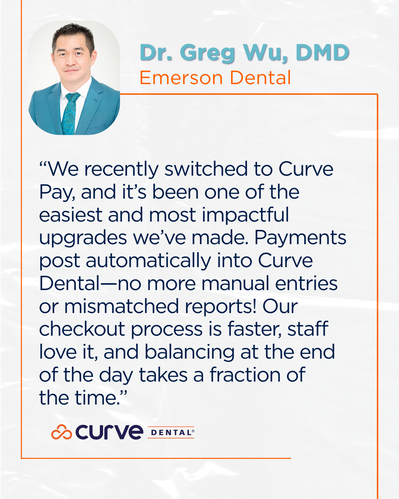
If your practice currently manages payments across multiple systems, it may be worth evaluating whether your payment setup is supporting or slowing down your financial tasks.
Modern dental platforms like Curve embed payment processing directly into the practice management system to simplify reconciliation, improve visibility into financial reporting, and reduce administrative challenges.
Schedule a Curve Pay demo to review your payment tasks with a specialist and see how embedded payments can support your practice.

Deborah E. Bush
Deborah E. Bush is a contributing writer specializing in dentistry and a subject matter expert on the behavioral and technological changes occurring in dentistry. A graduate of the University of Michigan and a student of positive psychology, Deb has more than four decades of technical writing experience for medical and dental outlets and authorities. Before becoming a dental-focused freelance writer and analyst, Deborah served as the Communications Manager for The Pankey Institute for Advanced Dental Education and as Director of Communications for the Preeclampsia Foundation. Her work with leading dental brands includes Patient Prism and Alatus Solutions (which includes DentalPost, Illumitrac, and Amplify360). She has co-authored and ghostwritten books and articles for multiple dental authorities.